A dental implant is the closest thing modern dentistry has to growing a new tooth. It does not slip like a denture, it does not lean on neighboring teeth like a bridge, and once it heals, it chews like the tooth you were born with. If you are missing a tooth, several teeth, or you are tired of a denture that will not stay put, this page explains exactly how implants work, who they are for, and what the process looks like at New Street Dental in Bethlehem.
Have questions already? Call (610) 867-7112. Dr. Tunney will give you a straight answer about whether an implant is right for your mouth, and a written estimate before anything begins.
What Is a Dental Implant, Exactly?
An implant has three parts, and understanding them makes every conversation easier:
- The post. A small titanium post placed in the jawbone, where it fuses with the bone over a few months. This becomes your new tooth root. Titanium is the same biocompatible material used in hip and knee replacements.
- The abutment. A small connector that links the post to the visible tooth.
- The crown. A custom porcelain tooth, matched to your smile, attached on top. This is the only part anyone ever sees.
Because the post fuses with your jaw, an implant does something no bridge or denture can: it keeps the bone alive. When a tooth is lost, the bone that held it starts to shrink from disuse. An implant loads that bone the way a natural root does, which is why implants are the only replacement that prevents the sunken look that can follow long-term tooth loss.
Why Patients Choose Implants
- They stay put. Eat corn on the cob, steak, apples. Nothing shifts, nothing comes out at night.
- They protect your other teeth. A bridge requires grinding down two healthy neighbors. An implant stands on its own.
- They preserve your jawbone and face shape. No other option does this.
- They last. With good hygiene, the implant post itself can last decades, often a lifetime. Crowns may be replaced after many years of wear, but the foundation stays.
- They are easy to live with. Brush and floss like a normal tooth. No adhesives, no soaking, no special routine.
One Tooth, Several Teeth, or a Full Arch
Replacing one tooth. One implant plus one crown. The gold standard for a single missing tooth, and the option that leaves every neighboring tooth untouched.
Replacing several teeth. Implants can anchor a bridge, so three or four missing teeth might need only two implants. No healthy teeth get ground down to carry the load.
Securing a full arch. A handful of implants can lock a full denture firmly in place. For patients who hate a loose denture, implant-supported dentures are usually the life-changing option: stronger chewing, no slipping, and no denture covering the roof of your mouth. Read more on our dentures page.
The Implant Process, Step by Step
Implant treatment is a journey measured in months, not days, and anyone who tells you otherwise is selling something. Here is the honest timeline:
- Consultation and 3D planning. Dr. Tunney examines your mouth, takes a CBCT scan (a quick, in-office 3D image of your jaw), and reviews your health history. The scan shows your bone, nerves, and sinuses in three dimensions, so you get a definite answer about whether an implant will work, not a maybe. You see everything on the chairside screens, and you leave with a clear plan and a written estimate.
- Any groundwork first. If a failing tooth needs extraction, or gum disease needs treatment, that happens before implant placement. Some patients need bone grafting if the jaw has thinned; you will know upfront if that applies to you.
- Guided implant placement. Using your CBCT scan, Dr. Tunney plans the exact position, angle, and depth of your implant digitally before surgery. A custom surgical guide made from that plan directs the placement, so the implant goes precisely where it was planned. Guided surgery typically means smaller incisions, a shorter procedure, and an easier recovery. Most patients describe recovery as easier than a tooth extraction, managed with over-the-counter pain relievers for a few days.
- Healing and fusion. Over roughly three to six months, the bone fuses to the post (the technical term is osseointegration). You are never left with a visible gap; temporary options cover the site while you heal.
- The new tooth. Once the post is solid, Dr. Tunney attaches the abutment and your custom porcelain crown, shaped and shaded to disappear among your natural teeth. Then you go eat something you have been avoiding.
Throughout the process, your care is coordinated in one familiar office by a dentist who knows your whole mouth, with any specialist involvement planned and explained upfront rather than discovered along the way.
Advanced Implant Technology at New Street Dental
The difference between a good implant outcome and a great one usually comes down to planning and precision. Here is the technology behind every implant we place:
99.2%Documented implant success rate
3DEvery case planned on a CBCT scan
USAImplants machined in California
CBCT 3D Imaging
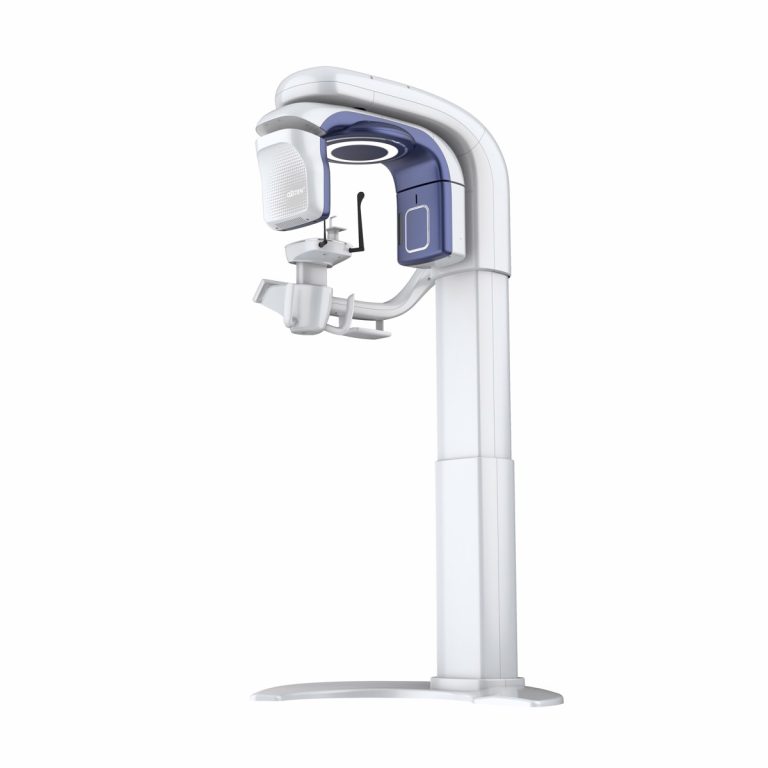
A regular X-ray is a flat picture. Our Hiossen T2 Plus CBCT captures a full 3D image of your jaw, right in our office, in seconds. It shows the height, width, and density of your bone, plus the exact position of nerves and sinuses, before anything is scheduled. It is how we know an implant will work for you, and exactly where it should go.
Guided Implant Surgery
Your CBCT scan becomes a digital surgical plan, and that plan becomes a custom guide, precision-fabricated by a specialized digital treatment planning lab such as Glidewell’s Digital Treatment Planning team. During placement, the guide directs the implant to the exact position, angle, and depth planned in advance. Guided surgery is our standard approach, not an occasional upgrade, because precision at this step is what makes an implant look natural and last.
The Glidewell HT Implant System
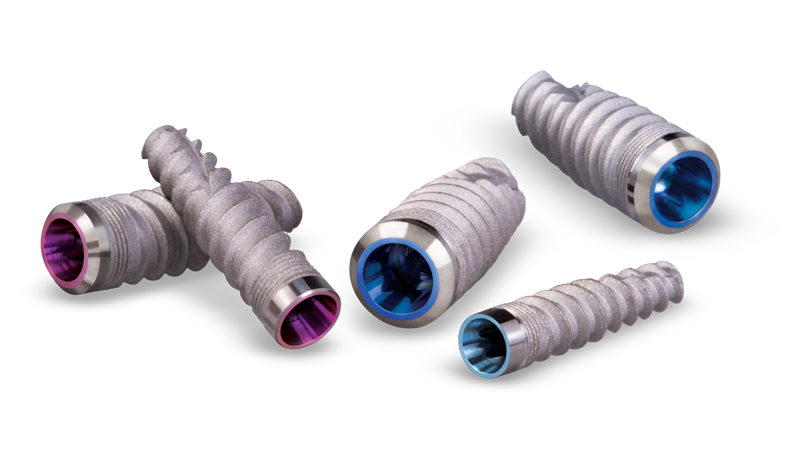
The implant itself matters as much as the planning. We place the Glidewell HT Implant System: an FDA-cleared implant machined from high-strength titanium alloy in Southern California, with a documented 99.2% success rate. Its design has been trusted by thousands of dentists since 2015, backed by the most experienced dental lab in the world.
A Recent Implant Case at Our Office
Here is a real case treated at New Street Dental. This patient had a molar that could not be saved. After the tooth was removed, Dr. Tunney placed a Glidewell HT implant using the guided technique described above. Shared with the patient’s permission.
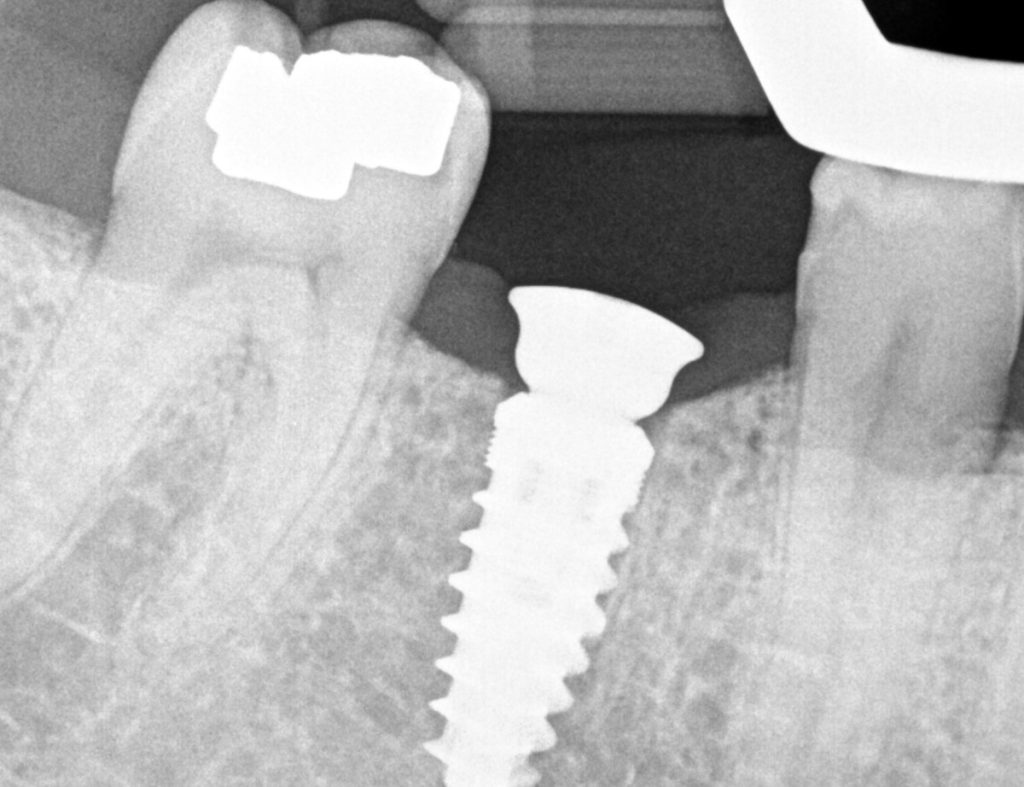
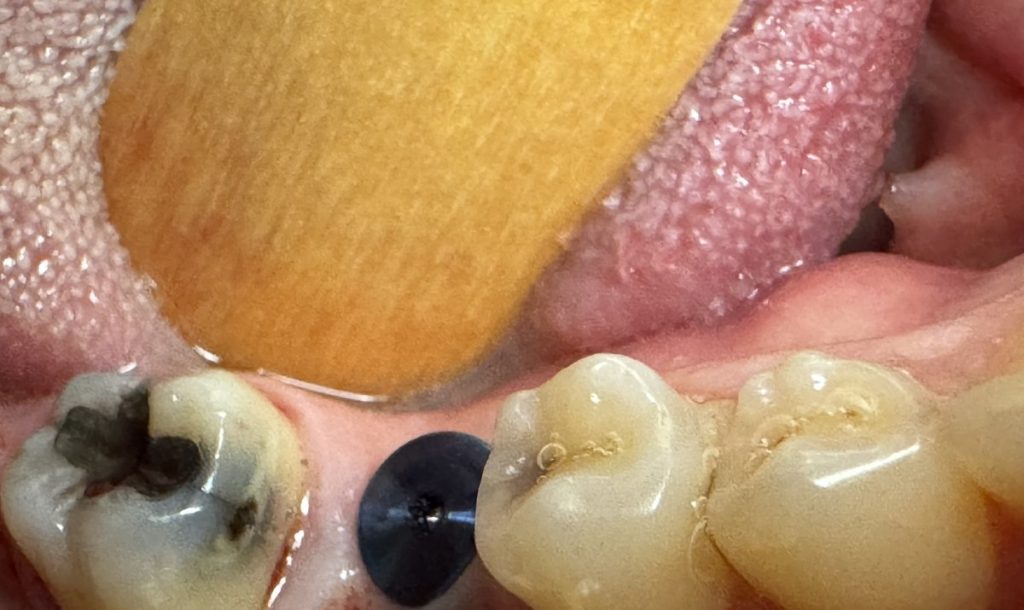
This case is still healing. We will add the finished crown once it is placed, so you can see the completed result.
What About Bone Grafting?
“You may need a bone graft” sounds alarming, so here is the plain-English version. An implant post needs enough bone to hold it, the way a fence post needs enough ground. If a tooth has been missing for years, or gum disease thinned the bone, the site may need rebuilding first. A graft adds bone material to the area, your body integrates it over a few months, and then the implant proceeds normally.
It is a common, routine step, not a complication, and plenty of patients need no grafting at all. Your CBCT scan answers the question before anything is scheduled, and if grafting applies to you, it appears in your written plan with its own timeline and cost. Nothing about it gets discovered halfway through.
Implant vs. Bridge vs. Denture: The Honest Comparison
Dental Implant
Highest upfront cost, longest lifespan, only option that preserves jawbone, and the closest feel to a natural tooth. No impact on neighboring teeth. Needs surgery and months of healing.
Fixed Bridge
Moderate cost, no surgery, finished in weeks. Requires grinding down the two neighboring teeth to anchor it, does nothing for the bone underneath, and typically needs replacement every 10 to 15 years.
Removable Denture
Lowest upfront cost and no surgery, but it can shift, needs relines as the jaw changes, comes out at night, and does not stop bone loss.
There is no universally right answer; there is a right answer for your mouth, your health, and your budget. Dr. Tunney will lay the options side by side with real numbers and let you decide without pressure. Sometimes he will tell you the bridge or the denture is the smarter choice for you; that honesty is exactly why you can trust the recommendation when it is the implant.
Caring for Your Implant (It Is Easy)
Implants cannot get cavities, but the gum and bone around them still need defending: an inflamed implant site (the technical term is peri-implantitis) is the main threat to a healthy implant. The defense is boring and familiar. Brush twice a day, floss around the implant daily, and keep your six-month cleanings, where we check the implant, the crown, and the gum around it every visit. Do that, and decades is a realistic expectation.
Am I a Candidate for Dental Implants?
Most healthy adults are. The real requirements are:
- Enough healthy jawbone to hold the post. If bone has thinned, grafting can often rebuild it.
- Healthy gums. Active gum disease has to be treated first, because implants need the same healthy foundation teeth do.
- Good general health. Conditions like uncontrolled diabetes or heavy smoking slow healing and lower success rates. They do not automatically rule implants out, but they need honest discussion.
Age alone almost never disqualifies anyone; we evaluate patients well into their 80s. The only way to know for sure is an exam and a CBCT scan, and Dr. Tunney will tell you plainly if an implant is NOT your best option. That honesty is the reason patients trust the recommendation when it is.
What Do Dental Implants Cost in Bethlehem?
Implants cost more upfront than a bridge or denture, and pretending otherwise would insult your intelligence. But the comparison over time is closer than most people expect: bridges and dentures typically need replacement every 5 to 15 years, while a well-maintained implant is usually a one-time investment.
The total depends on how many teeth you are replacing, whether extractions or bone grafting come first, and the type of restoration on top. So here is how we make the cost manageable and predictable:
- A written estimate at your consultation. Every step priced before you commit to anything, with no surprises mid-treatment.
- Same-day insurance estimates. Some plans now cover parts of implant treatment (often the crown, sometimes more). We check your specific benefits, including Aetna, Blue Cross Dental, Cigna, Concordia, Delta Dental, Guardian, and MetLife plans.
- CareCredit financing. We participate in CareCredit, which lets you spread treatment into monthly payments. And because implant treatment naturally happens in stages over months, costs are naturally staged too.
Why Have Your Implant Done at New Street Dental?
Plenty of offices place implants. Here is what is different about doing it here:
- 3D planning and guided surgery as the standard of care. Every implant is planned on a CBCT scan and placed with a custom surgical guide. Many offices treat that as an upgrade; here it is simply how implants are done.
- A proven implant system. We place the Glidewell HT Implant System: titanium, made in the USA, FDA-cleared, with a documented 99.2% success rate.
- One office, one doctor, the whole way. Consultation, planning, the restoration, and every checkup afterward happen at 920 N New Street with Dr. Gene Tunney (DDS, New York University), a dentist who will still be your dentist in year five when the implant needs nothing but a cleaning.
- Restoration is the point. An implant succeeds when the final tooth looks right, bites right, and lasts. That is restorative dentistry, and it is the heart of this practice.
- Calm, honest care. Anxious patients are our specialty, and implant consultations here are education, not sales. Ask our Google reviewers.
- Modern diagnostics. Hiossen T2 Plus CBCT 3D imaging, instant digital X-rays, and intraoral cameras mean you see the plan, not just hear it.
We serve implant patients from across the Lehigh Valley: Bethlehem, Bethlehem Township, Fountain Hill, Freemansburg, Hellertown, Catasauqua, Center Valley, Nazareth, and Allentown.
FAQ: Dental Implants in Bethlehem
How much do dental implants cost in the Lehigh Valley?
It depends on how many teeth are being replaced and whether preparatory work (extraction, bone grafting) is needed first. At your consultation you get a clear, written, itemized estimate, plus a same-day insurance check, so you know the full picture before deciding.
Does getting a dental implant hurt?
Placement is done under local anesthesia, and most patients are surprised: the usual report is a few days of soreness managed with over-the-counter pain relievers, often easier than a tooth extraction. The months of healing afterward are typically painless.
What is guided implant surgery?
It means your implant placement is planned digitally on your CBCT scan first, then carried out with a custom surgical guide that directs the exact position, angle, and depth of the implant. It removes guesswork, usually shortens the procedure, and tends to make recovery easier. It is how implants are placed at New Street Dental.
What implant brand do you use?
We place the Glidewell HT Implant System, an FDA-cleared titanium implant made in the USA. Its design has been used by thousands of dentists since 2015 and carries a documented 99.2% success rate. Dr. Tunney chose it for its track record and for the support of the dental lab behind it, the most experienced in the world.
How long do dental implants last?
The titanium post can last decades, frequently a lifetime, with good brushing, flossing, and regular checkups. The porcelain crown on top may need replacement after 10 to 15 years of normal wear, which is a much smaller procedure.
How long does the whole process take?
Usually three to six months or more from placement to final crown, because the bone needs time to fuse to the post. If extractions or grafting come first, add healing time for those. It is a process that rewards patience with a tooth that lasts.
Is an implant better than a bridge?
Different jobs. A bridge is faster and costs less upfront but requires reshaping the neighboring teeth and typically gets replaced every 10 to 15 years. An implant stands alone, preserves bone, and usually never needs replacing. Dr. Tunney will lay out both paths for your specific gap; sometimes the honest answer is the bridge.
Can I get implants if I have worn dentures for years?
Often yes. Long-term denture wear can thin the jawbone, so some patients need grafting first, but implant-supported dentures are frequently still achievable and are the single most life-changing upgrade we see patients make. An exam and a CBCT scan will give you a real answer.
Ready for a Real Answer About Implants?
One visit. A 3D scan, a straight recommendation, and a written estimate. No pressure, no sales pitch.